
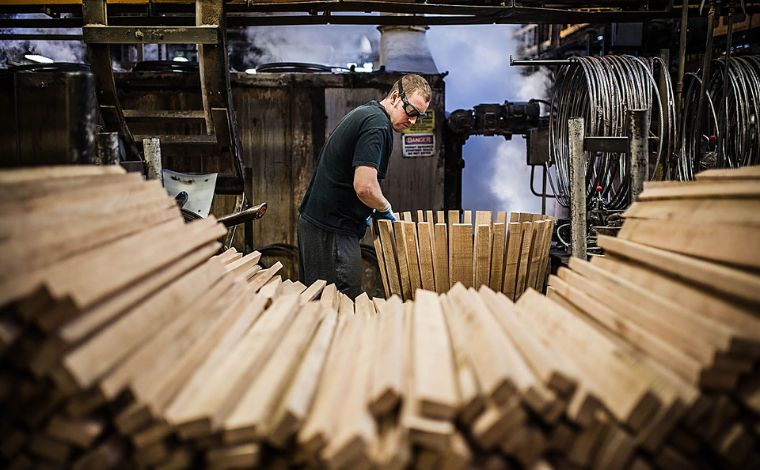
White Oak as a Biological Currency White Oak (Quercus alba) has transcended its status as mere lumber to become a premier “Biological Currency” in the 2026 global market. Its unique cellular structure—specifically the presence of “tyloses” which make the wood liquid-tight—makes it irreplaceable for the artisanal cooperage (barrel-making) industry and high-end architectural millwork. For the S&A Trust, managing a White Oak stand is not about “logging”; it is about “Portfolio Management.” A stand of export-grade hardwoods is a self-appreciating asset that grows regardless of what the Federal Reserve does with interest rates.
The “Forest to Finish” Vertical Integration
The tragedy of traditional timber sales is the “Middleman Drain.” Most landowners sell their standing timber to a logger, who sells to a mill, who sells to a broker. By the time the wood reaches a premium buyer, the original landowner has captured only a fraction of the value. The House Cotman model utilizes our Mill Sector Integration (Article 13) to capture more of the “Value Chain.”
Our strategy for high-grade hardwoods involves:
- Veneer-Grade Selection: Using GIS and precision forestry, we identify individual “Legacy Trees” that meet export-grade veneer standards. These are harvested with surgical precision to minimize damage to the surrounding “Biological Hedge.”
- Carbon-Stewardship Premiums: In the 2026 market, we track the carbon sequestration of our stands. When we harvest, we can often sell “Carbon Offset Credits” alongside the physical timber, effectively getting paid twice for the same tree.
- Mill-Direct Pipelines: By leveraging our industrial mill contacts, we bypass traditional “pulp-wood” markets, ensuring our White Oak is destined for high-margin uses like premium bourbon barrels or custom millwork, where the “White Oak Premium” (Article 1) is highest.
Stewardship as Market Alpha
The “Artisanal Value” of our timber is a direct result of our stewardship. Trees grown in a healthy, managed wildlife corridor (Article 9) with proper hydrology management (Article 8) produce tighter grain patterns and fewer defects. We don’t just sell wood; we sell the result of a disciplined governance model. When a buyer sees the House Cotman sigil, they know they are receiving a product that was grown with a “Hundred-Year View.”
Author Bio
Authored by Jamiel Cotman, Principal Trustee of S&A Trust. With an extensive background in utility infrastructure and industrial logistics, Mr Cotman bridges the gap between raw land stewardship and the high-stakes world of mill operations. He manages S&A Trust with a focus on institutional-grade asset protection for the American landowner.