
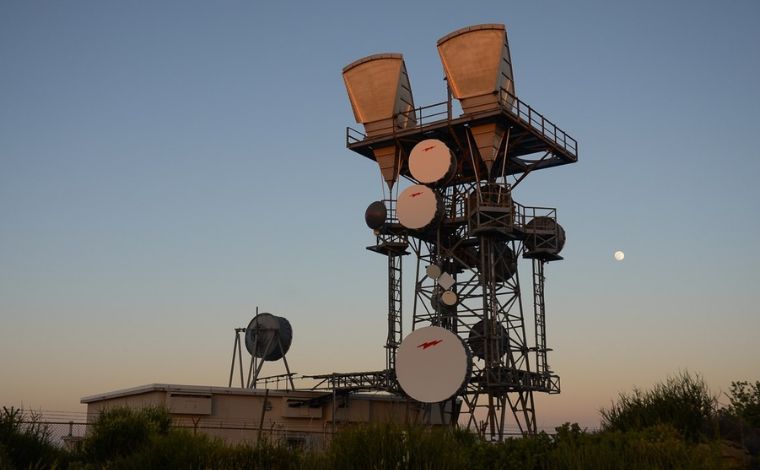
“Field Intelligence” in action—seeing the value that isn’t visible on a standard real estate listing.
The digital economy is no longer confined to glass-and-steel skyscrapers. In 2026, the “backbone” of global data transit is increasingly decentralized, stretching across rural landscapes to find the most efficient paths between regional hubs. For the S&A Trust, this shift has transformed the Annfield tract from a traditional timber property into a high-stakes Passive Infrastructure Asset. While the trees grow above and the soil thrives below, the air rights and underground easements of the property represent an “Invisible Grid” of connectivity.
The centerpiece of this strategy is the Microwave Relay. Unlike traditional cellular technology, which is designed to broadcast signals to local mobile devices, microwave relays are point-to-point systems. They act as “wireless fiber,” shooting massive amounts of data in a straight line from one tower to another. Because these signals travel at the speed of light through the air—without the “refractive delay” found in glass fiber optic cables—they are the preferred method for high-frequency trading and low-latency data synchronization.
However, microwave technology has a strict physical requirement: Line-of-Sight. Any topographic obstruction—a hill, a building, or a dense canopy—can degrade the signal. This is where the 262-ft elevation of the Annfield ridge becomes a premium commodity. By providing a natural “pedestal” that clears the surrounding landscape, the property offers a ready-made site for relay infrastructure.
Beyond the airwaves, we are monitoring the “terrestrial” side of the grid
Fiber Backbones. As Hanover County and the broader Mid-Atlantic region expand their digital footprints, rural properties that offer “strategic proximity” to existing utility corridors are being scouted for regional junctions. At S&A Trust, we have already mapped the proximity of local power and data lines. By identifying these “connectivity nodes” today, we ensure that when the grid expands, Annfield is the first logical choice for integration.
For a partner like Jack or an institutional investor, this infrastructure play provides a crucial Income Layer. While timber is a “long-term” harvest, a utility lease for a relay station or a fiber easement provides steady, non-correlated annual revenue. It is a way to monetize the “High Ground” without ever cutting a single White Oak. This is
Review the Grid. We have mapped every utility proximity and line-of-sight advantage. See the [Annfield Infrastructure Overlay] in the Data Room.
The 30% Speed Advantage: In the world of global finance, speed is measured in milliseconds. Because signals travel roughly 30% faster through the vacuum of air than through the solid core of a fiber optic cable, “High Ground” properties are becoming the “prime real estate” of the data transit world.
Related Articles
- Topographic Authority: Leveraging the 262-ft Ridge Line
- Infrastructure as an Asset Class: Beyond Agriculture
Author Bio
Authored by Jamiel Cotman, Principal Trustee of S&A Trust. With an extensive background in utility infrastructure and industrial logistics, Mr Cotman bridges the gap between raw land stewardship and the high-stakes world of mill operations. He manages S&A Trust with a focus on institutional-grade asset protection for the American landowner.