
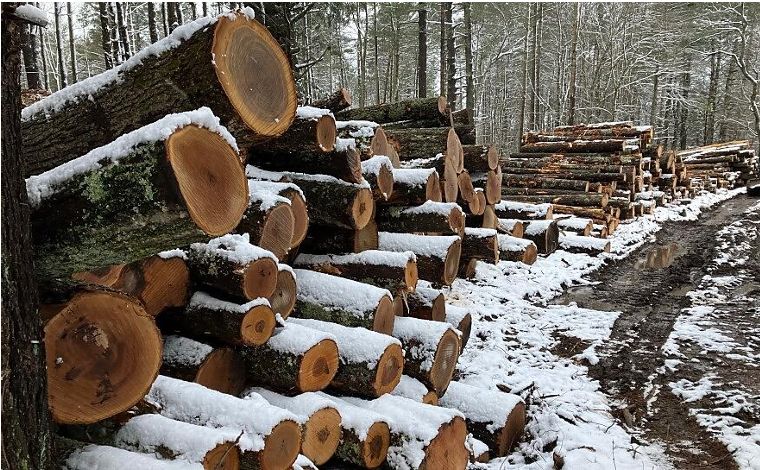
In the landscape of Mid-Atlantic timber, not all species carry the same weight on a balance sheet. While loblolly pine has long been the “workhorse” of the Southern timber industry, the current market cycle of 2026 has elevated a new king: White Oak (Quercus alba). For land stewards managing tracts like Annfield, the distinction between “pulpwood” and “export-grade veneer” is the difference between a marginal return and a generational windfall.
The resurgence of White Oak is driven by a unique “triple-threat” of global demand. First is the domestic Cooperage industry. The explosion of high-end American bourbon and rye whiskey production has created an insatiable need for White Oak barrels. Because White Oak contains tyloses—microscopic structures that plug the wood’s vascular system—it is the only species capable of holding liquid for years without leaking. This biological “flaw” is actually its greatest financial asset.
Second is the European and Asian luxury markets. As global consumers pivot away from synthetic materials, the demand for American “Clear-Bole” White Oak—wood that is free of knots and blemishes for at least the first 20 feet of the trunk—has reached record highs. This wood is destined for high-end architectural millwork and rift-sawn flooring in metropolitan hubs.
Finally, there is the Supply Tightness of 2026. Decades of high-volume harvesting without adequate regenerative management have left a gap in the supply of mature, 60-to-80-year-old oaks. At S&A Trust, we address this by managing our 24.25-acre tract with “Biological Interest” in mind. We aren’t just letting trees grow; we are actively thinning the forest to ensure the most dominant “Alpha” oaks have the space, sunlight, and nutrients to reach peak market diameter.
By prioritizing the health of the “Hardwood Core,” we transform the property from a static piece of dirt into a high-functioning timber factory. The goal for 2030 isn’t just a harvest; it’s a liquidation of premium biological capital. For the sophisticated investor, this represents a non-correlated asset that grows in value every day, regardless of what the federal funds rate or the stock market decides to do.
Secure Your Stake in the Canopy. S&A Trust maintains a real-time inventory of stand ages and species composition. View the full Annfield Timber Audit in our Secure Data Room.
The “Veneer” Metric
The “Veneer” Metric: In timber appraisal, “Veneer Grade” is the highest possible classification. It requires a tree to be perfectly straight, with no visible limbs on the lower trunk. A single veneer-quality White Oak can often be worth five times more than a standard “sawlog” of the same size. This is why we focus on “Clear-Bole” management at Annfield.
Related Articles
1. The 92 Mean: Understanding Biomass Health in Virginia Hardwoods
2. Biological Gold: Converting Forest Biomass into Tradeable Carbon Credits
Author Bio
Authored by Jamiel Cotman, Principal Trustee of S&A Trust. With an extensive background in utility infrastructure and industrial logistics, Mr Cotman bridges the gap between raw land stewardship and the high-stakes world of mill operations. He manages S&A Trust with a focus on institutional-grade asset protection for the American landowner.